

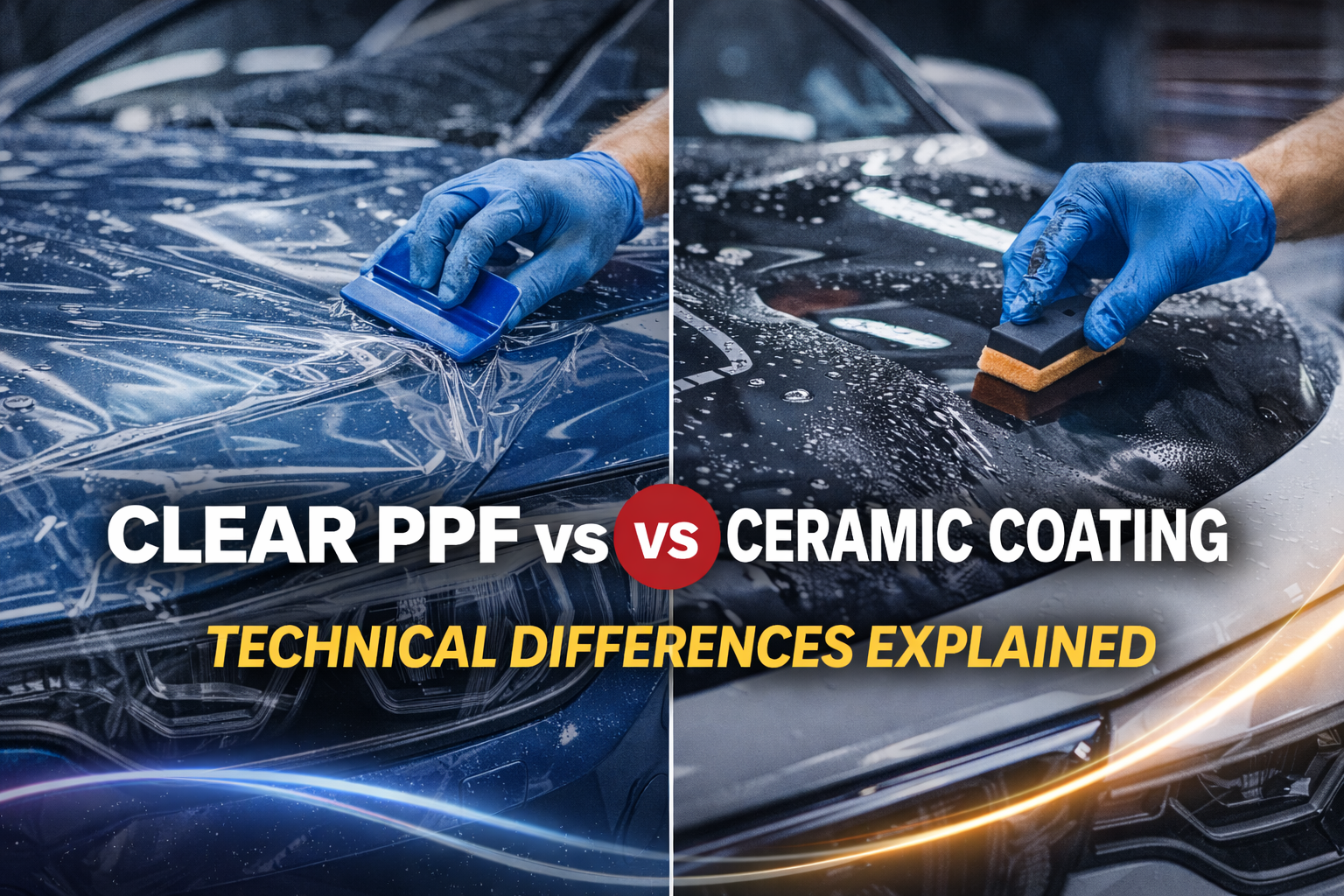
Clear PPF vs Ceramic Coating: Technical Differences Explained
Introduction
Clear Paint Protection Film (PPF) and ceramic coating are two widely used surface protection solutions in the automotive detailing industry. Although both aim to protect vehicle paint, their structure, function, and performance capabilities differ significantly.
For professional installers and workshops, understanding these technical differences is essential for recommending the correct solution based on client expectations and vehicle usage conditions.
Material Structure
Clear PPF
Clear PPF is a thermoplastic polyurethane (TPU) film designed to provide physical impact resistance. It typically consists of:
-
Clear coat layer (often self-healing)
-
TPU impact layer
-
Adhesive layer
-
Protective liner
Film thickness generally ranges between 150–200 microns depending on manufacturer specifications.
Ceramic Coating
Ceramic coating is a liquid polymer applied to painted surfaces. Once cured, it forms a thin protective layer chemically bonded to the paint.
Thickness is significantly lower than PPF, typically measured in microns far below film thickness levels.
Protection Mechanism
Impact Resistance
Clear PPF provides mechanical impact absorption against:
-
Stone chips
-
Road debris
-
Minor abrasions
Ceramic coating does not provide impact absorption. It offers surface hardness but cannot prevent stone chip damage.
Scratch Resistance
Ceramic coatings increase surface hardness and reduce light swirl marks.
High-quality PPF systems may incorporate self-healing top coats that allow minor scratches to disappear under heat exposure.
Hydrophobic Properties
Ceramic coating is primarily known for hydrophobic performance, enhancing water beading and chemical resistance.
Clear PPF may also offer hydrophobic top layers, but its core function remains impact protection rather than chemical resistance enhancement alone.
Longevity & Maintenance
PPF durability depends on installation precision, environmental exposure, and film quality. Properly installed film can provide long-term surface protection.
Ceramic coating lifespan varies based on product grade and maintenance routines. Periodic reapplication may be required depending on usage.
Installation Complexity
PPF installation requires:
-
Controlled environment
-
Slip solution (in wet application systems)
-
Precision trimming
-
Edge sealing
-
Professional tools
Ceramic coating requires:
-
Surface decontamination
-
Paint correction (if needed)
-
Controlled curing environment
Both require technical skill, but PPF installation is generally more labor-intensive and technically demanding.
When to Recommend Clear PPF
Clear PPF is recommended when:
-
Impact protection is a priority
-
High-risk driving environments exist
-
Long-term preservation of factory paint is required
When to Recommend Ceramic Coating
Ceramic coating may be recommended when:
-
Enhanced gloss is desired
-
Hydrophobic performance is the primary goal
-
Minor surface resistance improvement is sufficient
Professional Insight
In many cases, workshops combine both systems by installing PPF on high-impact zones and applying ceramic coating over protected and non-protected surfaces to enhance hydrophobic performance.
This hybrid approach maximizes both impact resistance and surface enhancement.
Conclusion
Clear PPF and ceramic coating serve different technical purposes within automotive surface protection.
PPF provides physical impact resistance, while ceramic coating enhances chemical resistance and surface gloss. Understanding these structural differences enables installers to recommend appropriate solutions based on performance expectations rather than marketing claims.
Go Wrap provides professional-grade paint protection film systems designed for workshops operating in modern automotive protection markets.