
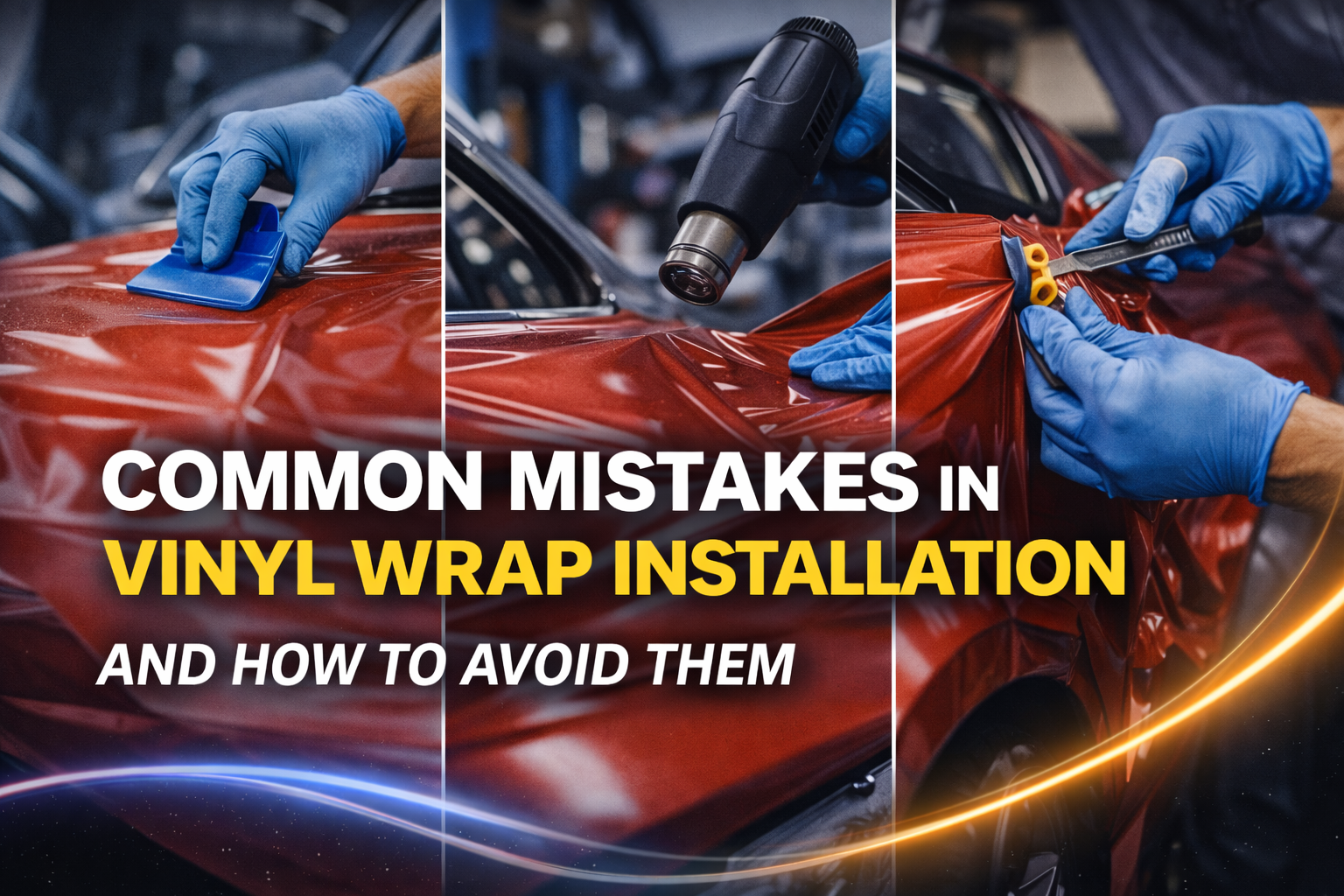
Common Mistakes in Vinyl Wrap Installation and How to Avoid Them
Introduction
Vinyl wrap installation requires precision, surface preparation discipline, and controlled working conditions. Even high-quality materials can fail prematurely if improper installation techniques are used.
Understanding common installation mistakes allows professional wrap studios to improve durability, reduce callbacks, and maintain consistent finish quality.
1️⃣ Poor Surface Preparation
One of the most common failures in vinyl wrap application is inadequate surface preparation.
Common issues include:
-
Residual wax or sealants
-
Oil contamination
-
Dust or micro debris
-
Silicone residues
Improper preparation can result in lifting edges, trapped contamination, or premature adhesive failure.
Professional practice requires thorough cleaning, degreasing, and panel inspection before film application.
2️⃣ Overstretching the Film
Excessive stretching weakens the film’s structure and reduces long-term adhesion strength.
Overstretched vinyl may:
-
Shrink back over time
-
Lift on edges
-
Lose color consistency
-
Show stress marks
Professional installers control tension and use heat management techniques to avoid material fatigue.
3️⃣ Incorrect Use of Heat
Heat is essential during vinyl installation, but improper temperature control can damage the adhesive layer.
Under-heating may result in poor conformability.
Overheating may cause distortion or adhesive breakdown.
Post-heating critical areas ensures memory reset and long-term stability.
4️⃣ Improper Edge Finishing
Edges and corners are the most failure-prone zones.
Common mistakes include:
-
Insufficient edge wrapping
-
Sharp trimming angles
-
Lack of post-heating
-
Poor edge sealing
Professional installers allocate additional time for edges to reduce future lifting risks.
5️⃣ Installing in Uncontrolled Environments
Dusty workshops, fluctuating temperatures, and high humidity can negatively affect adhesion performance.
Ideal installation conditions include:
-
Clean, controlled workspace
-
Stable temperature range
-
Adequate lighting
-
Proper air circulation
Environmental control directly impacts finish quality.
6️⃣ Using Low-Quality Tools
Poor tools increase the risk of:
-
Surface scratches
-
Improper squeegee pressure
-
Uneven application
-
Material waste
Professional-grade tools support consistent installation outcomes and reduce material stress.
Professional Insight
Most vinyl wrap failures are not material defects but installation-related errors.
Proper technique, environment control, and disciplined workflow significantly extend film performance and surface durability.
Conclusion
Vinyl wrap installation is a technical process that demands precision and experience. Avoiding common mistakes ensures long-term performance, clean finishes, and satisfied clients.
Go Wrap provides professional vinyl wrap systems and installation tools designed for workshops operating in modern automotive customization markets.